top of page

Behind the Scenes at St. Luke's Chapel

Sun, Jun 14

|

St Luke's Chapel

Registration is closed
See other events

Registration opens May 14, 2026, 12:00 AM

Behind the Scenes at St. Luke's Chapel

Time & Location

Jun 14, 2026, 2:00 PM – 4:00 PM

St Luke's Chapel, 149 Roxbury Street, Roxbury, Boston, MA, USA

About the Event

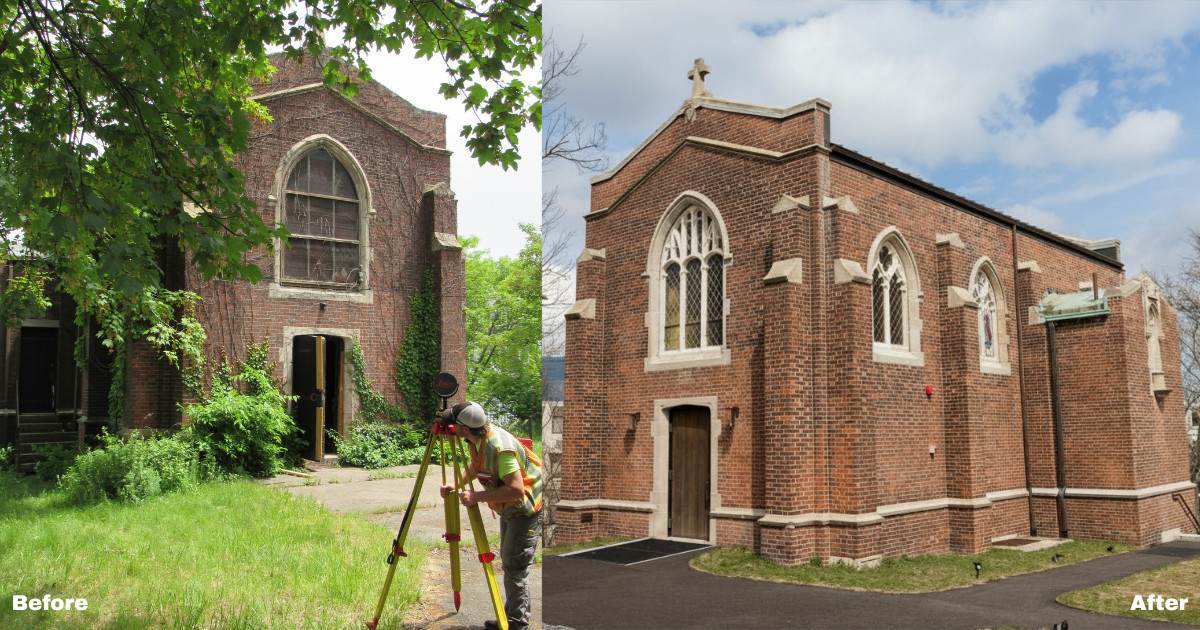
St. Luke’s Chapel takes it name from St. Luke’s Home for Convalescents (the Home). It was built for use by the patients at St. Luke’s home.


Discussion about the significance of the architect and its place in the community.


After a quarter century of operation at the site, the Home decided that its residents needed a proper building in which to attend to their spiritual needs and to support their physical recovery. The original building permit for their new chapel still exists. Dated October 18, 1901, it indicates that the St. Luke’s Home Corporation planned to construct a 34’ by 47’ brick and stone chapel (with a copper roof and cornice) designed by Boston architects Cram, Goodhue and Ferguson and to be built by H.P. Cummings, Inc. of Ware, MA, for an estimated cost of $10,000.


The Chapel was designed by Ralph Adams Cram (1863-1942), founder of a nationally prominent architectural firm known for ecclesiastical work of outstanding quality. He was a scholar of gothic architecture and had considerable influence on church architecture in the 20th century. St. Luke’s Chapel is an early Cram building.


The Episcopal parish of St. Johns St. James is a collection of two buildings on the northern edge of Roxbury’s John Eliot Square: Ionic Hall and St. Luke’s Chapel. Ionic Hall is Roxbury’s oldest brick building, built between 1800-1804. The building was designed in the Federal Style and built by Captain Stoddard of Hingham as a home for his daughter, Sally Hammond. By 1876, the house had been purchased by the Episcopal Diocese of Massachusetts which opened St. Luke’s Convalescent Home there. St. Luke’s Chapel, a Gothic Revival style chapel, was designed by Ralph Adams Cram and was constructed between 1893-1900. The structure is accented by a wooden reredos and cross decoration by the Boston-based wood carver Johannes Kirchmayer, a frequent Cram collaborator. Ionic Hall was used for worship and meetings. Its upper floors are vacant and have suffered from water damage in recent years. St. Luke’s is a greater challenge. It has had severe water penetration through holes in the roof, and the interior has experienced substantial deterioration and damage. The remaining members of St. James’s continued to meet separately after their church was demolished until 1968, when the two parishes “came to recognize the value of combining their resources” and merged as the new Church of St John/St. James. The new parish began worshiping on the former St. Luke’s site in a modern addition to the Ionic Hall building.


RSVP required. Light refreshments provided.

Share This Event

Events

I'm a paragraph. Click here to add your own text and edit me.
Let your users get to know you.

Headquarters

Dillaway Thomas House

Roxbury Heritage State Park

183 Roxbury Street

Roxbury, MA 02119

Email:
roxburyhistory@gmail.com


Tax ID
 04-6067297

Get RHS Email Updates

Thanks for connecting with us!

© 2023 by Roxbury Historical Society. Powered and secured by Wix |  Terms of Use  |  Privacy Policy

bottom of page